"DR" Family
I'm publishing my first infographic portfolio on cybersecurity products, purposes, and regulations. Many more are coming soon.
We can begin by getting to know the most basic and well-known elements of the Cyber Security Family, specifically the product family ending in 'dr', used in SOCs (Special Operations Centers).
6
Product
SOCs are Cybersecurity Operations Centers where teams automate products that provide 24/7 monitoring and rapid response and blocking to prevent the spread of threats.
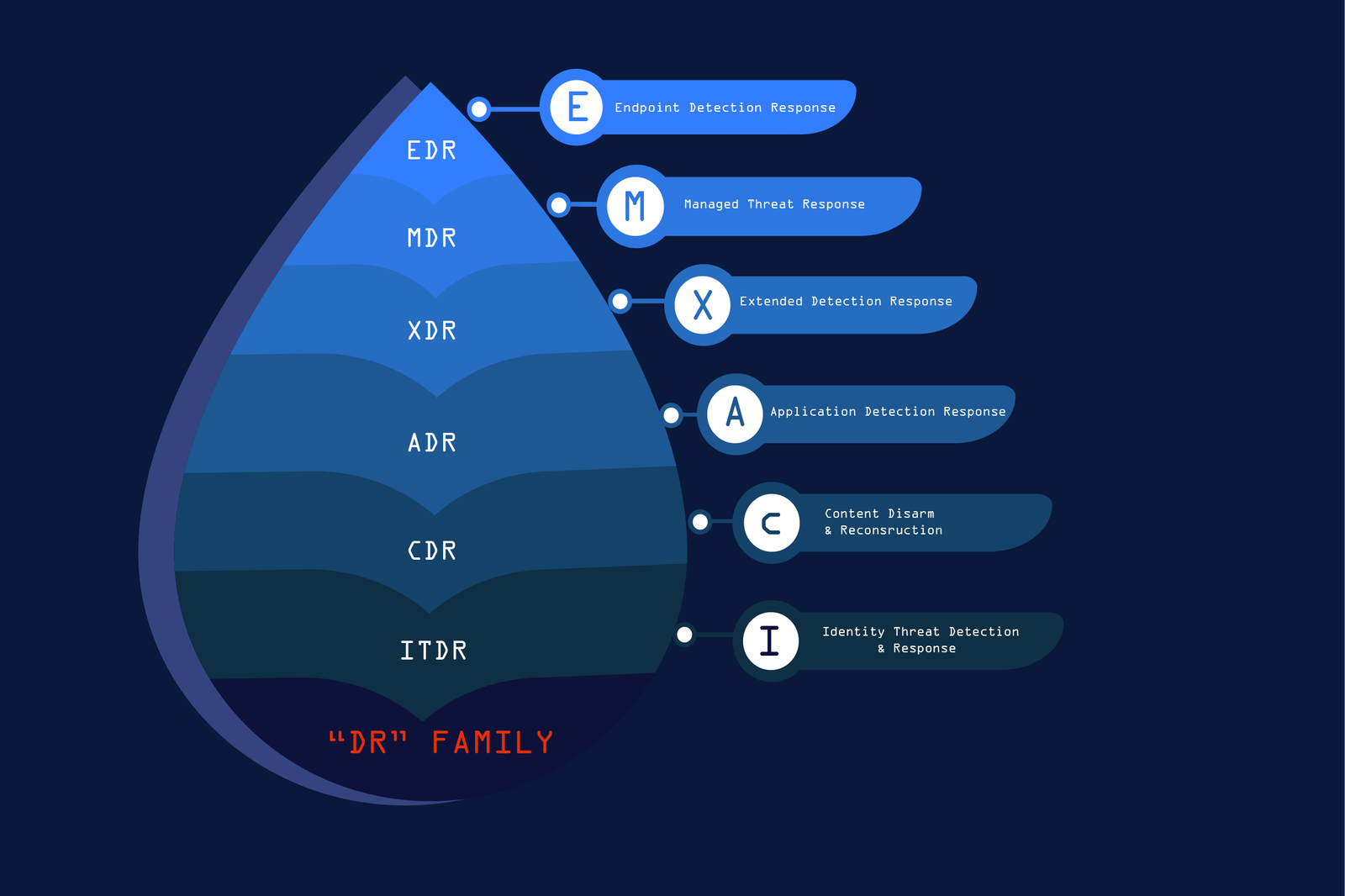
The products we will examine shortly are simply descriptions of the main products used by organizations and SOC centers.
1
What is EDR
EDR, Computer (Client), Server, Mobile Phone, Printer etc. detects threats by monitoring endpoint devices such as these, and takes correlation or blocks them according to the written rules. (response)
2
What is MDR ?
MDR, This is a service provided by security firms - outsourcing. They pull data generated by your security applications within your infrastructure and monitor it on a dedicated screen containing only your organization's data. They inform you of any necessary actions and provide periodic reports.
3
What is XDR?
XDR, security application provides organizations with the capability to monitor multiple security domains including endpoints, network devices, cloud platforms, and identity security (IT/OT), while simultaneously enabling rule creation, threat correlation development, and automated threat blocking through a centralized interface.
4
What is ADR?
ADR, Unlike other security products, this security application works at the application-layer instead of focusing on network or client devices and other technologies. It examines applications from their source code to the addresses they communicate with. It analyzes threats and prevents the execution of malicious code snippets embedded by Sattackers.
5
What is CDR?
CDR, This technology was developed in the field of threats found in documents-based. It is a proactive technology that cleans potentially unsafe/threat elements from documents that reach you via email, file sharing, or other sources. It does just not attempt to detect malware; it directly secures the file and delivers that secured version to recipients.